
Pool Leak Detection and Practical Repair Guidance
Smart Pools by Smart Management Group helps residential and commercial pool owners find the source of water loss with pressure testing, visual inspection, dye testing, endoscope review, and verification when repairs are complete.
Pool leaks are easier to solve when the source is found before repair work begins.
Water loss can come from plumbing, fittings, skimmers, the shell, tile line, equipment connections, or structural cracks. We use a methodical diagnostic process so the repair conversation is based on evidence instead of guesswork.
- Water level drops faster than normal evaporation
- Air in the system or equipment losing prime
- Wet areas around the pool, deck, or equipment pad
- Cracks near the beam, skimmer, fittings, or tile line
How we narrow down a pool leak.
Leak detection is not one single test. The right approach depends on the symptoms, pool type, plumbing layout, visible damage, and how quickly the water level is dropping.
Water loss assessment
Review the rate of water loss, operating conditions, visible symptoms, and whether the pool loses water while running or sitting still.
Visual and dye testing
Check likely leak areas such as skimmers, fittings, lights, tile line, cracks, and other penetrations where movement or failure can occur.
Pressure testing
Test plumbing lines to help determine whether the issue is in the suction, return, cleaner, or other pool plumbing circuits.
Endoscope review
Use camera inspection where appropriate to look inside lines, fittings, or hard-to-see areas before recommending repair work.
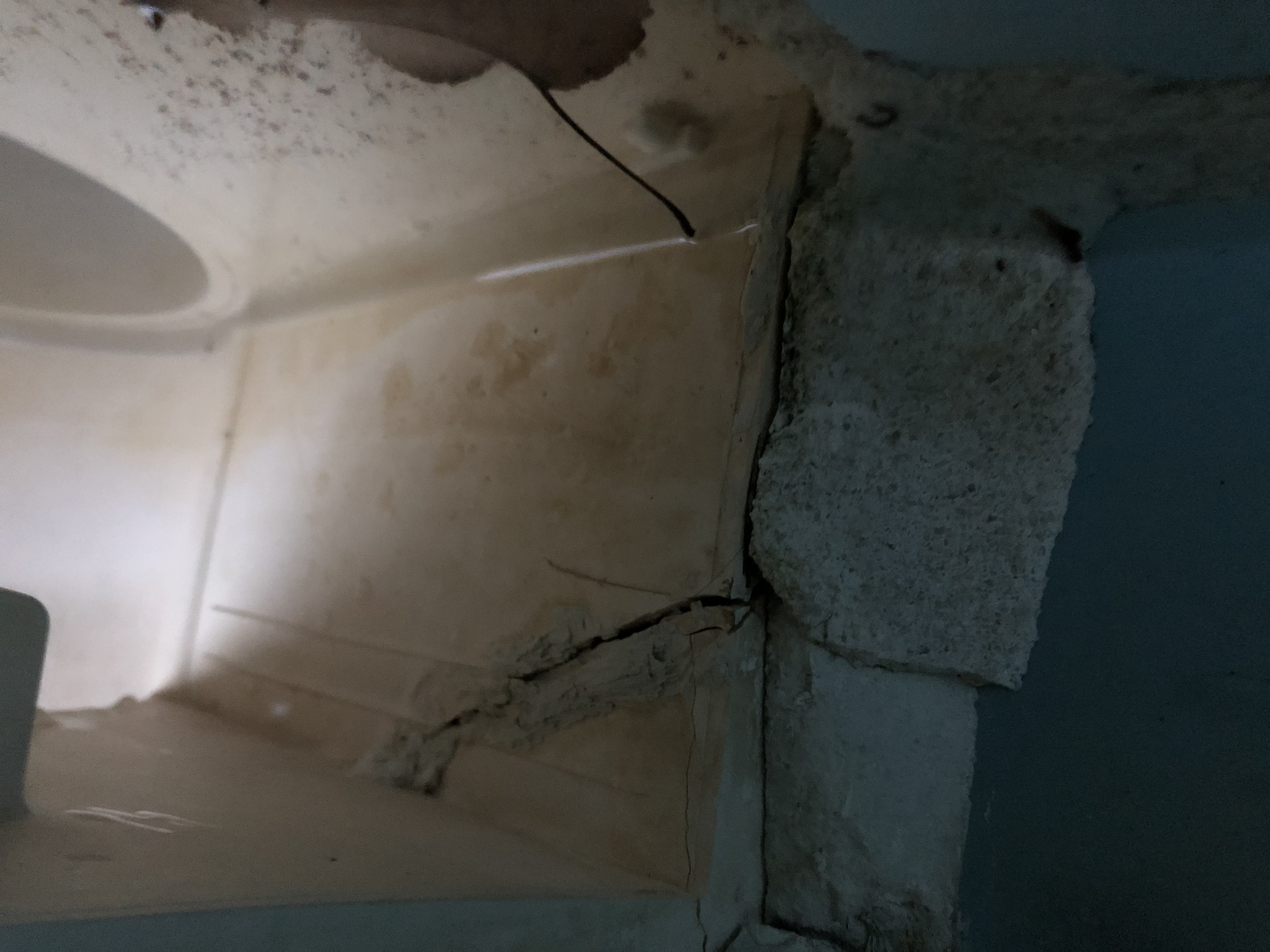
A visible crack can be the symptom, not the whole problem.
Skimmers, fittings, beam areas, and plumbing penetrations are common places where leaks show up. A focused inspection helps determine whether a repair should be isolated, paired with resurfacing, or planned as part of a larger renovation.
- Review visible cracks and waterline conditions
- Separate plumbing leaks from structural leaks
- Document the most likely source of water loss
- Recommend a practical repair path after testing
Testing, inspection, and verification help reduce guesswork.
These examples show the kinds of tools and findings that can be part of a leak detection visit. The goal is to locate the issue clearly enough to make the next repair decision with confidence.
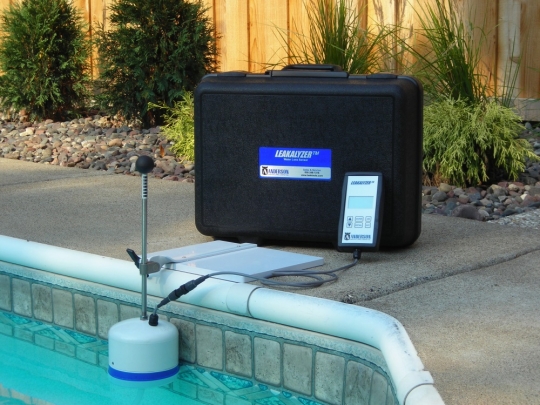
Leakalyzer verification
Electronic water-loss measurement can help confirm whether the pool is still losing water after repair work.
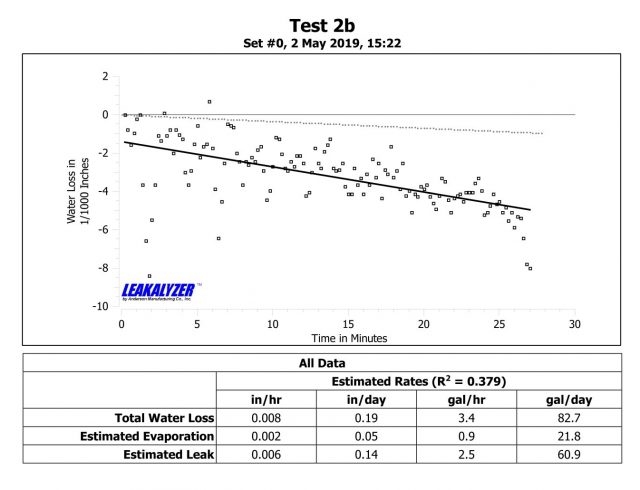
Diagnostic reporting
Reports and readings provide a clearer record of the condition before and after leak-related work.
Pressure testing
Line testing helps isolate plumbing problems and determine whether a pipe circuit is holding pressure.
Camera inspection
Endoscope review can help inspect hidden areas that are difficult to evaluate from the pool deck alone.
Fitting inspection
Returns, lights, drains, and other fittings are checked when symptoms point to a penetration or connection leak.
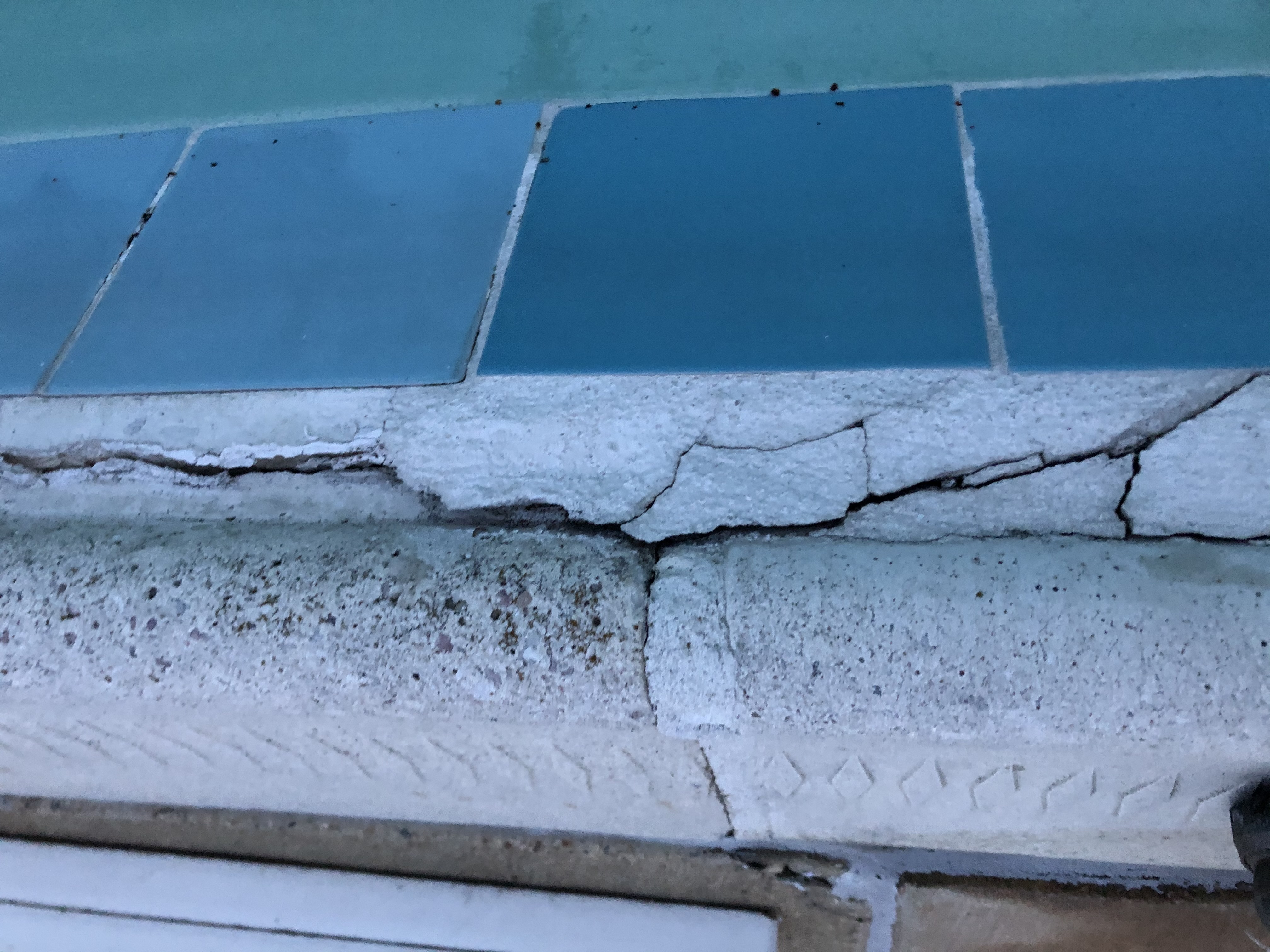
Structural clues
Cracks near the beam, tile line, or skimmer can point toward repair needs that should be reviewed carefully.
Leak detection is most useful before damage spreads.
Consistent water loss
If the water level drops repeatedly after refilling, schedule testing before assuming it is evaporation.
Visible cracks or gaps
Cracks, open joints, loose fittings, or damaged skimmers should be reviewed before they turn into larger repair work.
Equipment symptoms
Air bubbles, poor circulation, or a pump that loses prime can point to plumbing issues that need diagnosis.
Pool leak detection FAQ
How do I know if the pool is leaking or just evaporating?
Evaporation changes with weather, wind, water temperature, and pool use. If the loss is consistent, unusually fast, or continues after refilling, leak testing is the safer next step.
Do you repair the leak after finding it?
When the repair is within our scope, we can help with the repair path. If the issue requires specialized excavation or a larger renovation plan, we help identify the practical next step.
Can plumbing lines be tested separately?
Yes. Pressure testing can help isolate different circuits so the issue is not treated as one broad unknown.
What should I send with a leak request?
Send the pool address, photos of visible cracks or wet areas, the approximate water-loss rate, and whether the pool loses water with the equipment on, off, or both.
Send the symptoms and we will help determine the right leak detection path.
A short description, a few photos, and the pool address are usually enough to start the conversation.