
Pool Repair, Resurfacing, and Equipment Help
Smart Pools by Smart Management Group helps residential and commercial pool owners address structural issues, surface deterioration, equipment problems, plumbing concerns, and larger renovation needs.
Repair issues are easier to control when they are reviewed early.
Small cracks, failing skimmers, rough plaster, outdated equipment, and circulation problems can grow into larger pool operation issues. We help identify the right repair path and determine when a simple fix, resurfacing, or broader renovation conversation makes more sense.
- Beam, coping, tile, and skimmer repairs
- Pool plastering and resurfacing
- Pump, filter, heater, automation, and salt system upgrades
- Plumbing, circulation, and hydraulic improvements
What we can help repair or coordinate.
Pool repair work can involve the structure, interior finish, waterline, plumbing, and equipment pad. Our goal is to help you understand what is urgent, what can be planned, and what should be grouped together.
Tile, coping, and beam
Repair or replace waterline tile, coping stones, beam areas, expansion joints, and related finish details.
Skimmers and plumbing
Address skimmer issues, plumbing concerns, circulation problems, and drain conversion planning.
Equipment upgrades
Review pumps, filters, heaters, heat pumps, salt systems, automation, and other equipment needs.
Surface repairs
Plan plaster, quartz, pebble, and resurfacing work when the pool interior is worn, rough, or stained.
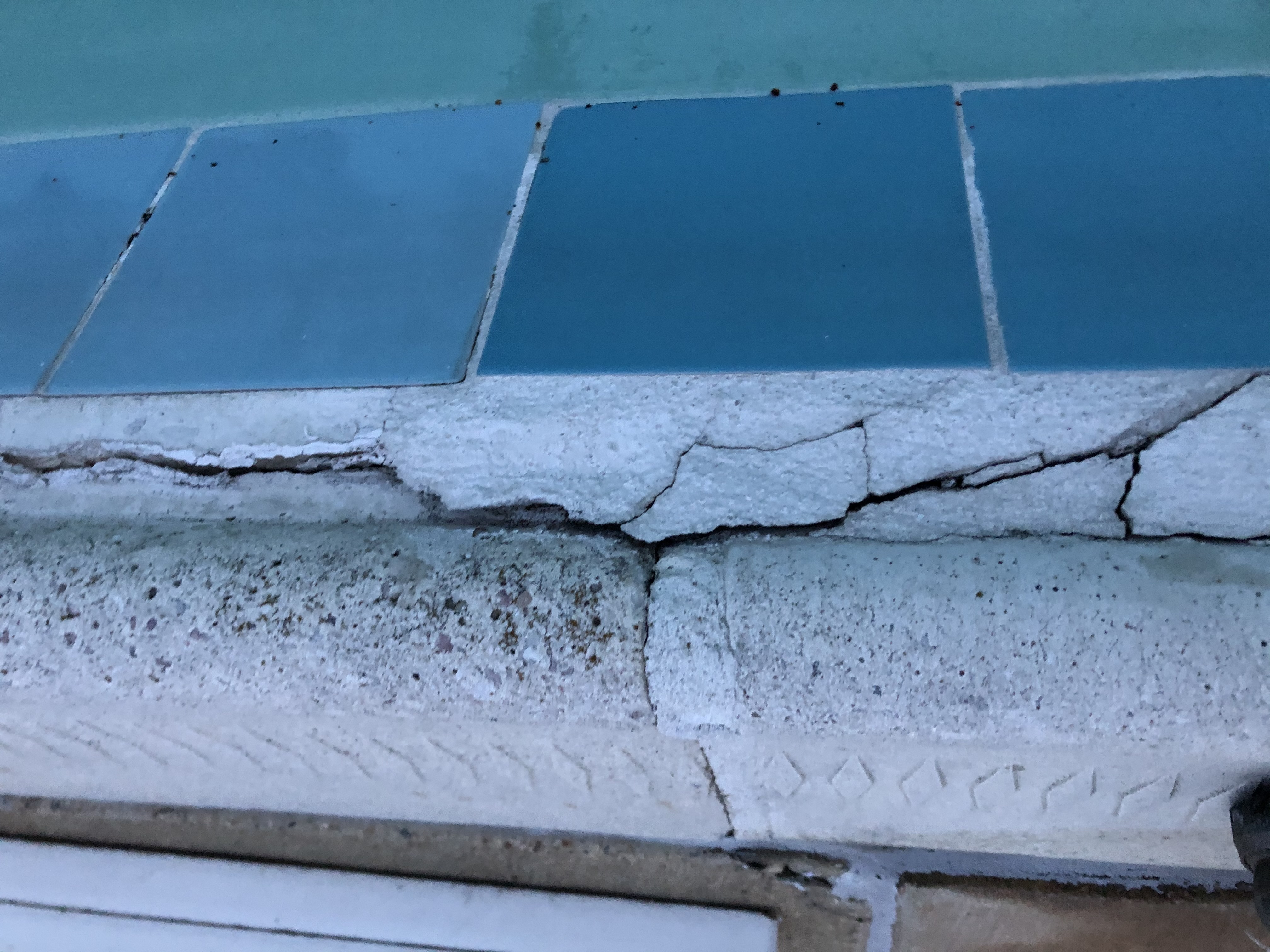
Cracks, beam damage, and failing pool components should not be ignored.
Visible damage can point to deeper issues around the pool shell, beam, tile line, skimmers, or plumbing penetrations. A repair review helps separate cosmetic concerns from items that can affect water loss, safety, or long-term durability.
- Review visible cracks, failed joints, and deteriorated materials
- Check tile, coping, skimmer, and beam conditions
- Identify whether repair work should be paired with resurfacing
- Discuss timing before seasonal use increases
Resurfacing protects the pool shell and improves the swimming surface.
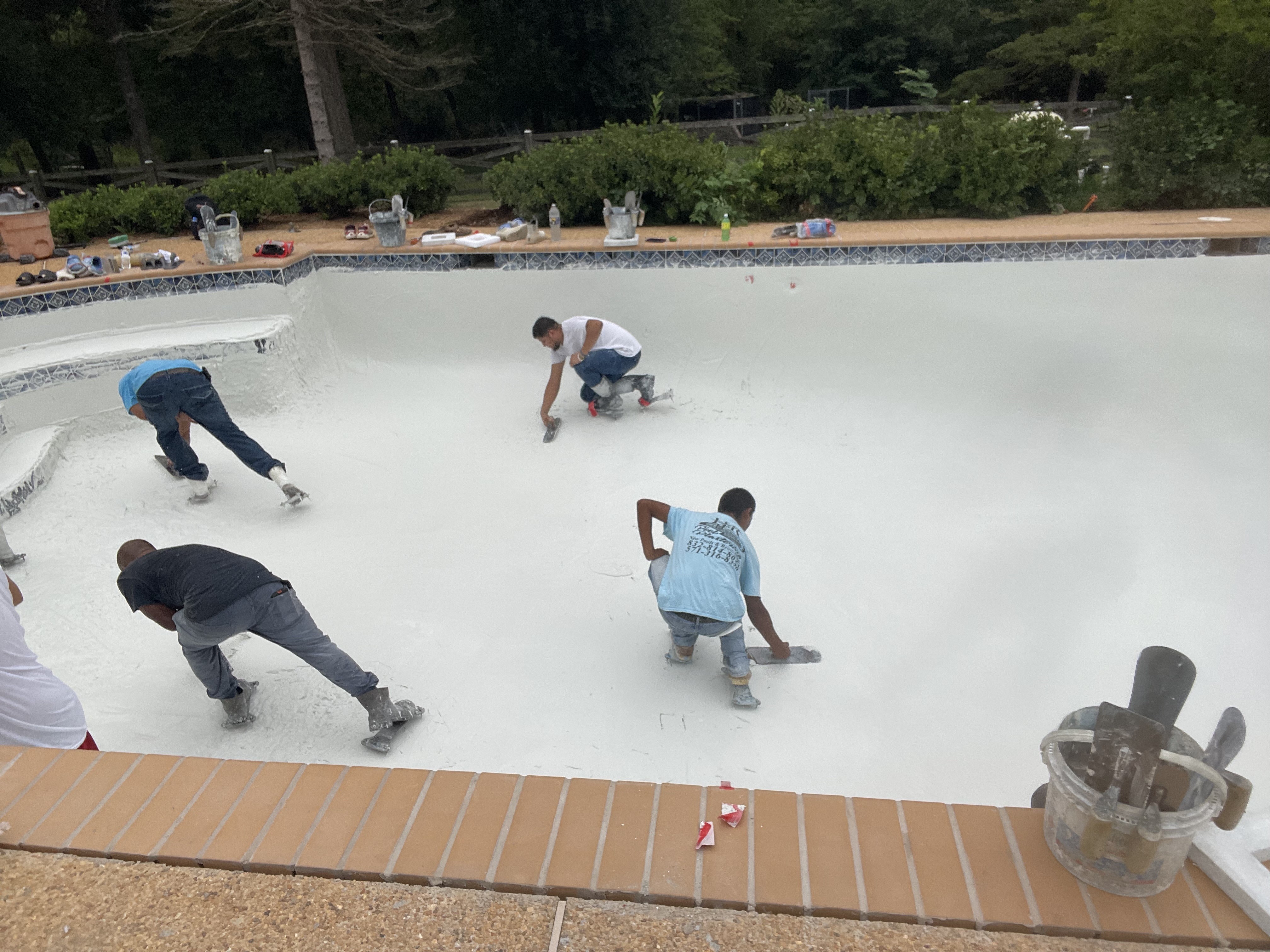
Pool plaster is the interior finish over the shell. When it becomes rough, stained, deteriorated, or worn through, resurfacing helps restore the pool's surface and appearance.
Finish options
Traditional plaster, quartz aggregate, pebble, exposed aggregate, and decorative finish systems.
Plaster application
New plaster is applied and troweled into place, followed by careful startup and water chemistry management.
Strip-down preparation
Older finish layers may need to be removed down to the shell so the new surface can bond properly.
When to request repair guidance.
Visible damage
Cracks, loose coping, broken tile, deteriorated skimmers, and failing joints should be reviewed before they worsen.
Rough or stained surface
If the pool surface is uncomfortable, stained, or visibly worn, resurfacing may be the better long-term repair path.
Equipment problems
Pump, filter, heater, automation, salt system, and circulation issues can affect water quality and operating cost.
Pool repair FAQ
Can you handle both residential and commercial repairs?
Yes. We support homeowners, communities, apartments, clubs, and other managed facilities.
How do I know if I need resurfacing?
Rough texture, staining, worn plaster, exposed material, or repeated surface problems are signs a resurfacing conversation may be useful.
Can equipment upgrades be done with renovation work?
Yes. It is often practical to review pumps, filters, heaters, automation, and plumbing while other renovation work is being planned.
What should I send with a repair quote request?
Photos, the pool address, known equipment information, symptoms, and timing help us understand the issue faster.
Send the pool issue and we will help identify the next step.
Photos and a short description are usually enough to start the repair conversation.